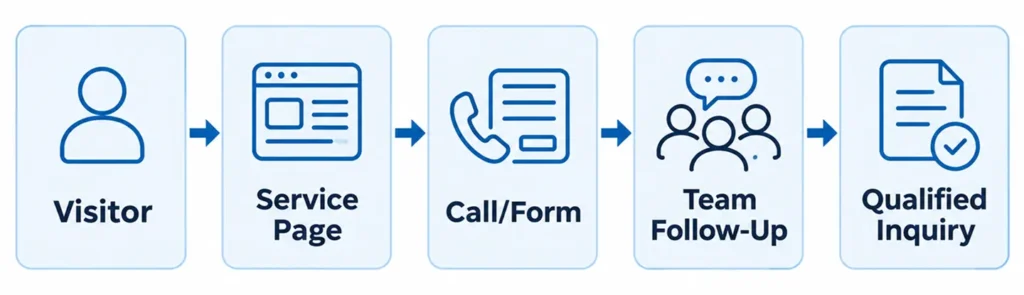
Customers now discover companies through traditional search results, maps, and AI-powered experiences that summarize information or answer questions directly. That creates a new question for business owners: how can a company become easier for AI search systems to discover and describe accurately?
There is no reliable switch that guarantees your business will be mentioned in an AI answer. Different systems use different sources and may change how they select, summarize, or cite information. However, the same fundamentals that help people understand a company—clear service pages, consistent business details, credible evidence, and an accessible website—can improve its discoverability.
This guide explains what businesses can control, what they cannot, and how to build a practical AI visibility plan without chasing shortcuts.
1. Understand What AI Search Visibility Means
AI search visibility is not a single ranking position. It can refer to a business being mentioned in an AI-generated response, its website being cited as a source, or its information being represented accurately when a user asks about a service or company.
An AI answer may vary by the question, location, timing, source availability, and product. A business may appear for one question and not another. That is why a screenshot of one answer should never be presented as proof of permanent placement.
Treat AI visibility as an additional way to assess how understandable and trustworthy your online information is, not as a replacement for conventional search performance.
2. Build Pages That Clearly Explain Your Services
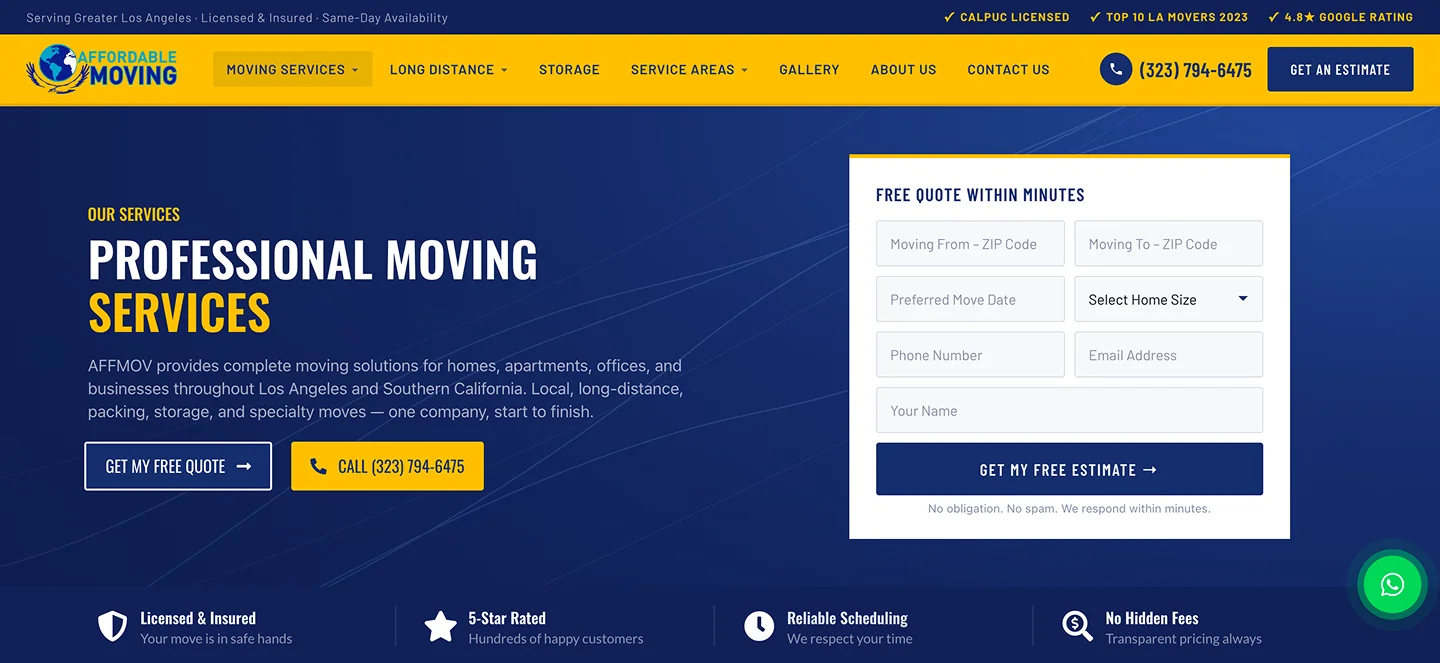
Start with the questions your customers actually ask. What do you do? Who do you help? Where do you operate? What is included in a service? How does someone request an estimate or consultation?
Give important services their own useful pages when the topics warrant it. Use specific headings, straightforward descriptions, and clear next steps. Avoid pages filled with repetitive keywords or generic statements that could describe any company.
For example, an HVAC company might explain the difference between maintenance and repair, describe the types of systems it services, and clarify its actual coverage area. Useful details serve customers first and may also make the information easier for search and AI systems to interpret.
3. Make Important Information Accessible to Search Systems
If key content exists only inside an image, hidden widget, or script that fails to render, visitors and automated systems may have difficulty accessing it. Important business information should appear as readable text in a well-structured page.
Use logical headings, descriptive links, accessible navigation, and sensible internal linking. Check whether relevant pages can be crawled and indexed by search engines where intended. Ensure that canonical URLs and robots directives do not accidentally exclude important content.
Technical SEO does not guarantee an AI mention, but it reduces avoidable obstacles. Before adding new AI-specific features, confirm that the existing website works correctly on mobile and that its main service pages are accessible.
4. Keep Business Information Consistent Across Sources
For local businesses, accurate names, phone numbers, websites, hours, and service areas matter. Conflicting information can confuse customers regardless of which search experience they use.
Review your website, Google Business Profile where eligible, and other relevant profiles or directories. Correct outdated phone numbers, old domains, or services that are no longer offered. Do not create fictitious locations to appear in more cities.
Consistency does not mean copying identical promotional text everywhere. It means ensuring that the underlying facts about the business are correct and easy to verify.
5. Demonstrate Real Experience and Evidence
A credible website should show what the business actually does. Authentic project photos, detailed case studies, accurate team information, service explanations, and verifiable customer feedback can help people evaluate a company.
If you publish a case study, explain the problem, the work performed, and the outcome using information you can substantiate. Do not invent conversion increases, rankings, or customer quotations to make a page more persuasive.
Where useful, include dates or context so readers can tell whether information is current. A clear explanation of a real project is more valuable than a vague claim that the business is the best in its market.
6. Answer Questions Naturally, Not for a Formula
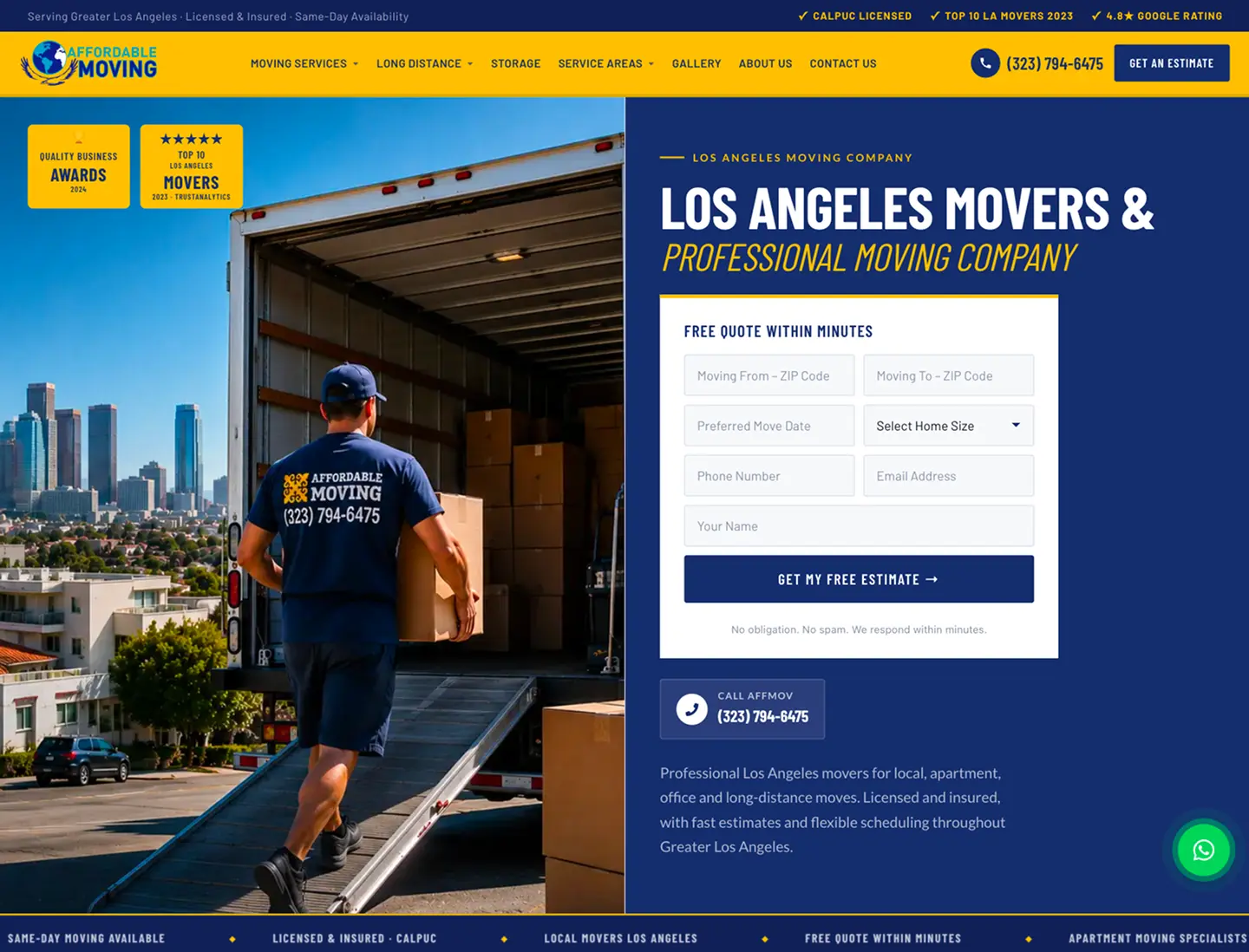
Helpful articles and FAQs can address questions that do not fit on a short service page. Focus on questions that customers genuinely ask before contacting a provider.
Use plain language, clear definitions, examples, and relevant limitations. Do not manufacture dozens of nearly identical articles to target slight variations of a phrase. Search engines and AI systems do not offer a universal word count or keyword density that guarantees inclusion.
Keep information current. When a platform, policy, or service changes, update the article rather than leaving an outdated answer online.
7. Use Structured Data Carefully
Structured data can help describe certain page types and business facts in a machine-readable format. Relevant schema may include Organization, LocalBusiness when accurate, Service, Article, and BreadcrumbList, depending on the page.
Markup must match the visible content. It should not claim ratings, locations, offers, or credentials that do not exist. Valid structured data is not a promise that an AI product will mention the company or that a search result will display a special feature.
Start by making the page itself accurate and useful. Add appropriate markup as a supporting technical layer, then validate it.
8. Measure AI Visibility Without Inventing Precision
Begin with a small set of real customer questions. Record the question wording, product used, date, location context when relevant, whether the business appears, and whether the response cites a source. Repeat checks periodically using a consistent method.
Do not treat a handful of manually tested prompts as a comprehensive market share measurement. Responses can vary between sessions, and some tools do not expose enough data to attribute every mention or visit.
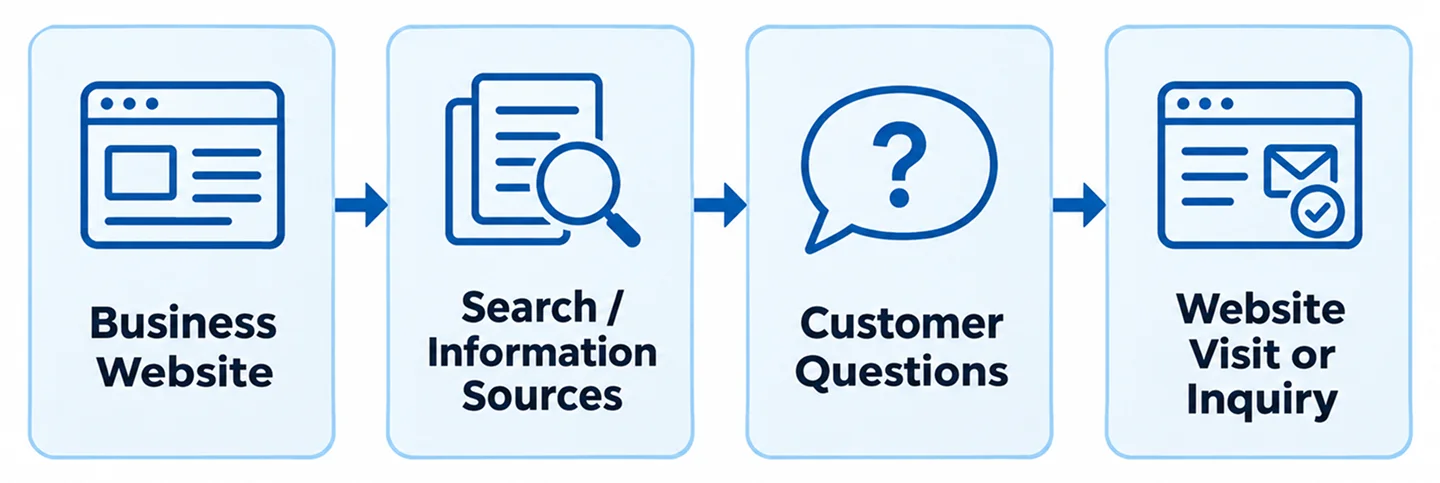
Combine this qualitative review with ordinary business measures: search traffic, qualified calls, form submissions, and customer inquiries. The goal is to understand whether customers can find and trust the business—not to chase an isolated screenshot.
9. Avoid Common AI Visibility Shortcuts
Be skeptical of guaranteed inclusion in ChatGPT or other AI answers. No agency can control every model’s response or guarantee that a particular business will be cited.
Avoid publishing misleading claims, fake reviews, synthetic client results, or mass-produced pages that add no original value. Do not block important pages from indexing by accident, and do not assume that installing a chatbot on your website will automatically make the business more visible in AI search.
A practical strategy combines good content, technical accessibility, accurate business information, and regular review of how customers discover the company.
A Practical 30-Day Starting Plan
Week 1: Review the homepage, main service pages, and business contact details. Identify inaccurate or missing information and check that important pages are accessible.
Week 2: Improve the highest-priority service pages with clear descriptions, customer questions, relevant examples, and accurate service areas. Fix broken forms and internal links.
Week 3: Add or improve one authentic case study or helpful article. Review relevant business profiles for consistency and check appropriate structured data.
Week 4: Test a small set of realistic customer questions across the AI search products your audience may use. Record observations and prioritize the next improvements. Do not assume that changes will produce immediate mentions.
Frequently Asked Questions
Can I pay to guarantee my business appears in AI answers?
No reputable provider can guarantee organic inclusion or citation across AI systems. Paid advertising products, where offered, are separate from organic mentions and should not be confused with them.
Does traditional SEO still matter for AI search?
Yes. Clear content, accessible pages, accurate information, and useful site structure remain important foundations. AI systems vary, so traditional SEO alone does not guarantee a mention.
Will adding AI-generated articles improve visibility?
Simply producing more articles is not a reliable strategy. Content should be accurate, useful, distinctive, and reviewed for quality regardless of how it was drafted.
How do I know whether AI search brings customers?
Track actual website visits and inquiries where reliable attribution is available, and supplement those data with careful manual checks. Avoid attributing every new customer to AI without evidence.
Make Your Business Easier to Understand and Discover
AI-powered discovery is changing, but the strongest starting point is familiar: explain your services clearly, publish truthful evidence, maintain accurate business information, and make it easy for customers to contact you.
Nabali Development helps US businesses improve websites, SEO foundations, local visibility, and practical AI discovery readiness. If you want to understand where your online presence can improve, request a preliminary review and discuss the next steps.
Get a Free Website Audit